“The Yorkshire historian, Henry Schroeder recorded that “On the morning of Thursday 12th Sept. 1844, a train of 240 carriages drawn and propelled by nine powerful engines took 6,600 passengers from Leeds to Hull and back at a reduced fare of two shillings, third class. Such was the boom in the public’s like of trains and cheap one day tickets.”
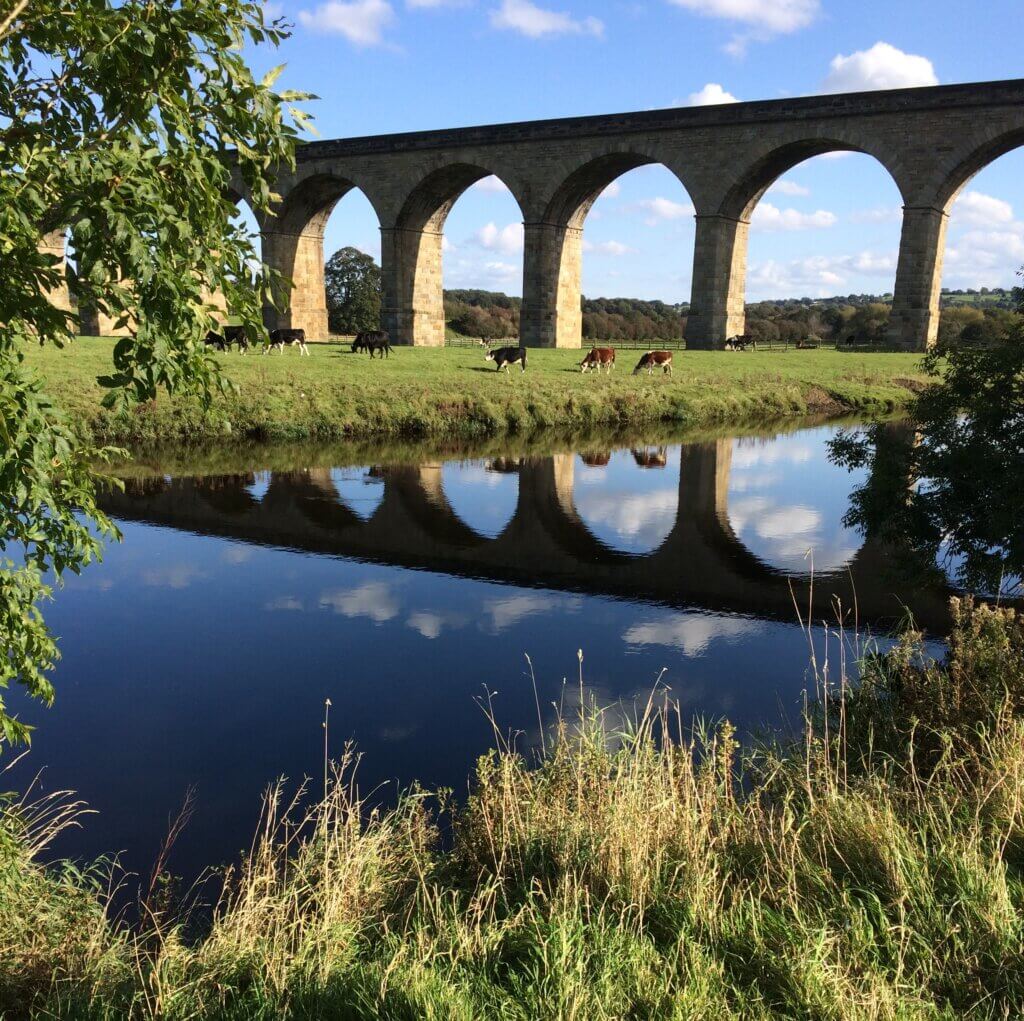
Prospects for the building of the Thirsk-Leeds line by the North Eastern Railway were discussed in May 1845 along with the possibility of a branch line to Pool and Otley. By October 1845 the Thirsk-Leeds line was well underway. After the completion of the “Wharfdale” Viaduct and Bramhope Tunnel (northern portal Grade 2 listed) it opened on 10th July 1849. The construction involved 2300 men, 400 horses and cost more than 23 lives.
From the period when the station was near the Pool to Harewood road: RAIL 527/23 Way & Works Committee, minute 1564 of 4 January 1856: “It having been reported that it would be desirable to have the station at Arthington lighted with gas, and that Mr Stead was constructing gas works at that place, from which a supply might be obtained at a cost of 7s 0d per thousand cubic feet, resolved that this be carried into effect, the supply of gas being obtained from Mr Stead until further notice. The cost of the fittings to be charged to capital. (courtesy Neil Mackay, Chair NRA) * Arthington House and farm, sold in 1860 when Mr. Stead was described as “Railway Contractor.”
Although the projected plans for a Wharfedale branch line from Arthington through to Pool, Otley and villages to the west had been considered in 1845, they had been dispelled as it was considered to be “useless to the northern villages.” The Ordinance Survey map of 1847 already showed the intended route through Pool. This eventual proposal did not meet the approval of some landowners who would have to sell their land to the North Eastern Railway Company. One objection was the nearness of the route to their residences which would cause noise and pollution.
Other arguments also had to be resolved
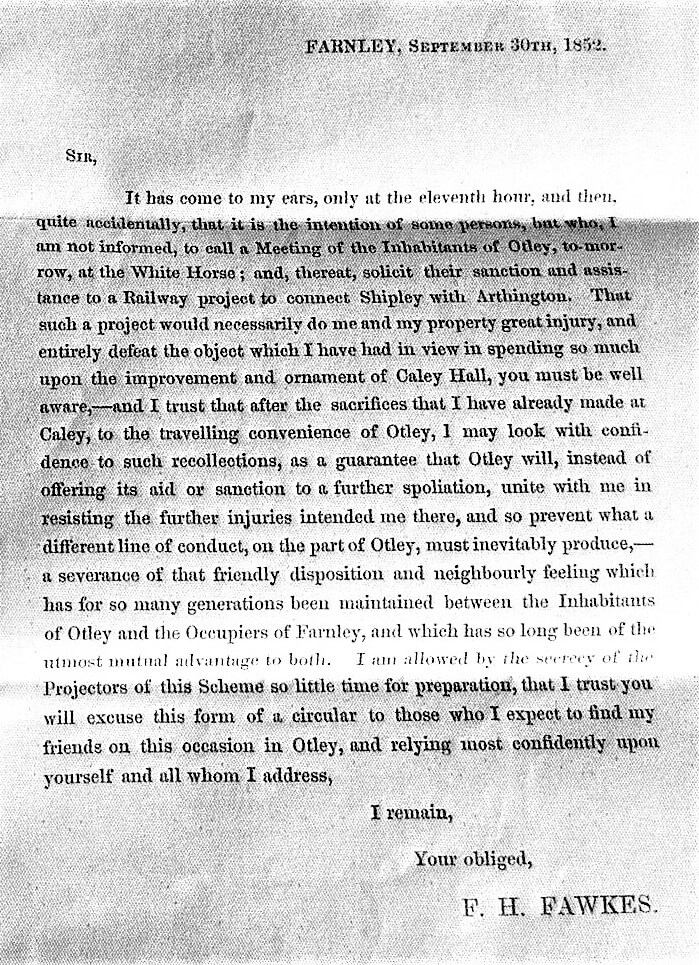
In 1852 Fawkes issued a circular to 250 residents of Otley asking them to object to the railway project as “it would do me and my property great injury and entirely defeat the object which I have had in view in spending so much upon the improvement and ornament of Caley Hall…”
“Public opinion was keenly though not evenly divided on the advisability of having a railway running through the valley at all. Mr. Jeremiah Garnett of Wharfeside, Otley, took a very active part supporting the proposal and he was backed up by a large number of Wharfedale residents.
Mr. Francis Hawksworth Fawkes. Squire of Farnley and owner of Caley Hall was for a long time very actively opposed to the venture and these two gentlemen carried on a “pamphlet battle” before Mr. Fawkes finally but reluctantly agreed to the railway passing through his land.
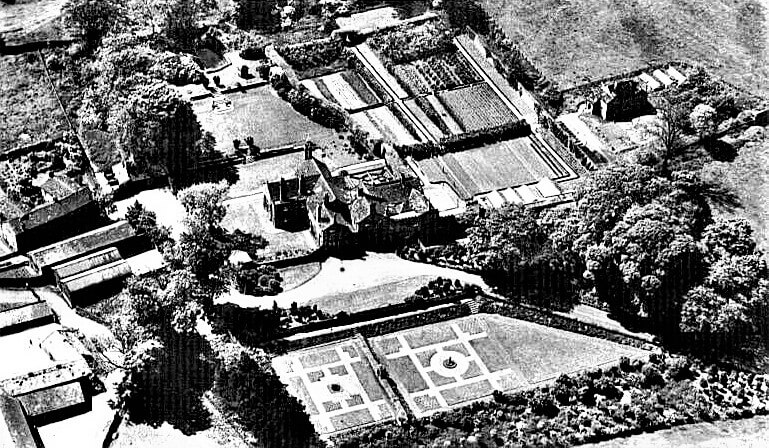

He imposed certain conditions, for example the railway was to be out of sight in a cutting as it passed Caley Hall while the bridge carrying the road to Caley Hall from the main road (Otley/Pool) was to be four yards wide and its walls not less than six feet high so that horses passing over the bridge may not be “exposed to be frightened by trains.” Further, Mr. Fawkes was to be at liberty to plant trees on such parts of the embankment in return for land surrendered to the North Eastern Railway Company. The document from the Fawkes’ records not only lays down conditions to be complied with by the Railway Company but also insists that the rights then existing should be maintained. The Court Roll maps show the rights of way of the time and the steps taken to ensure these rights are to be seen today.” “The coming of the Railway 1865” by E.T. Cowling & David Nealey
A large framed poster is housed in Otley Museum advertising “A Grand Pleasure Excursion organised by the Otley Mechanics Institution leaving Pool Station during Otley Feast on 7th August 1849.” The poster goes on to say,”To dispel monotony and render the trip perfectly agreeable the excellent rural band of F.H.Fawkes Esq. has been engaged for the occasion and will play several favorite airs throughout the day.” Wall tiles in the York National Railway Museum dated around 1900 shows the station at Arthington called “Leathley/Pool”
Eventually agreement was made but the line to pass Caley Hall was to be more than 160 yards away and the railway cutting to be 20 feet deep. The Fawkes estate’s financial gain for this part of the line was £2,500, excluding compensation to tenants which was made separately by the railway company.

The North Eastern Railway required building consent from all land owners along the route. On 1st December 1860 a letter was received by John Pullein, Lord of the Manor of Pool, requesting that he agree to either “assent, dissent or be neuter”, to its building through the “township of Poole”, their report was to be sent to Parliament.
Arthington Station
Work on the line finally began in 1863. The Wharfedale branch line joined the Leeds/Thirsk line, now the North Eastern Railway (M.Jessop), at Arthington where a triangle was constructed, known as the Arthington Triangle, with a signal box at each of the three points. “The original station at Arthington, then named “Pool”, was opened in 1849 south of the bridge crossing the A659. This was served by trains on the Leeds-Thirsk line; Pool village was about one mile from this station.
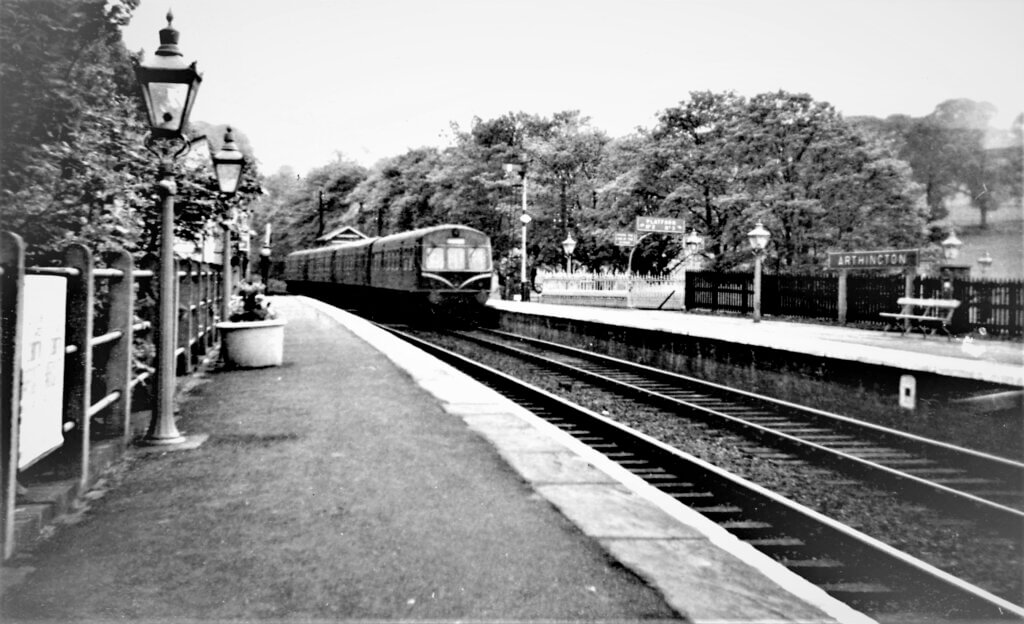


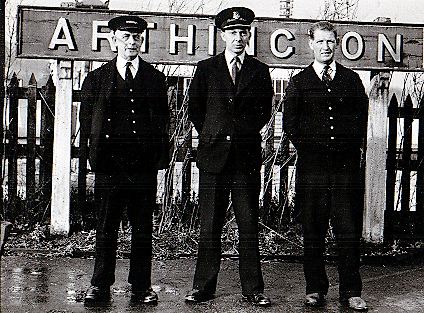
The station was renamed Arthington by the Leeds Northern Railway in 1852.
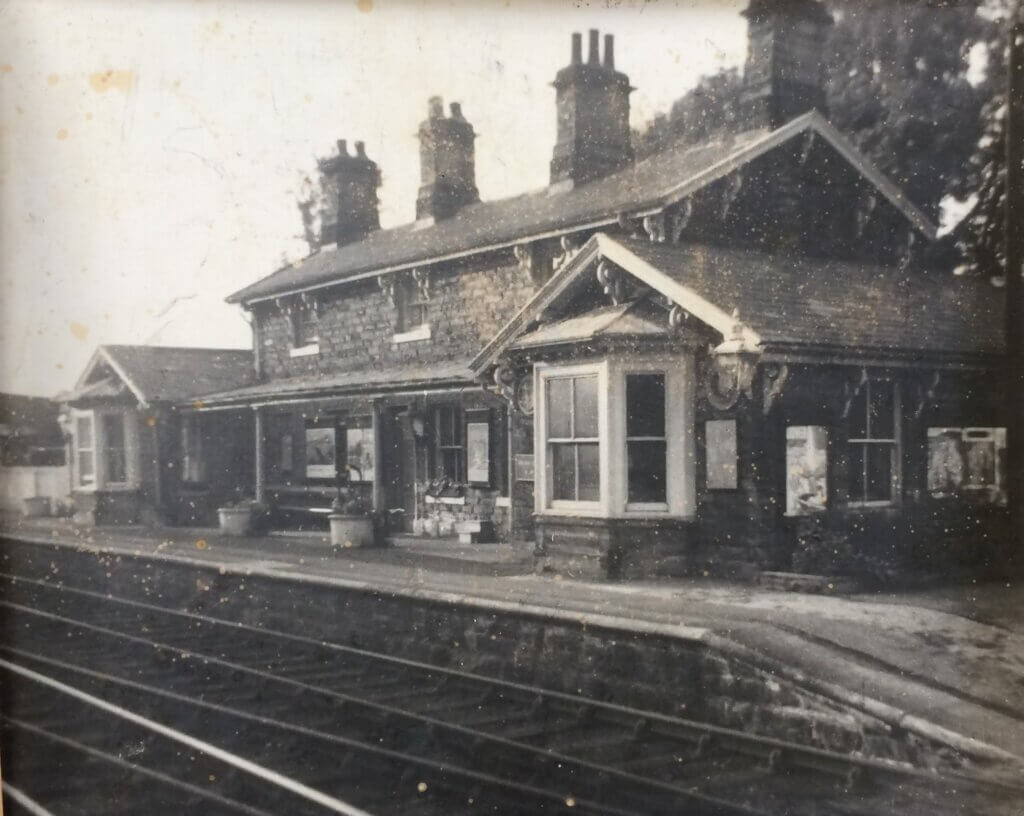
When the Wharfedale branch line opened in 1865, a temporary station was opened at Arthington South junction,and the old station was closed. Despite complaints about the poor quality of the “wooden hut” at the junction, this seems to have been in use until 1876 when it was replaced by a new permanent station, seen above “(Neil Mackay NERA)
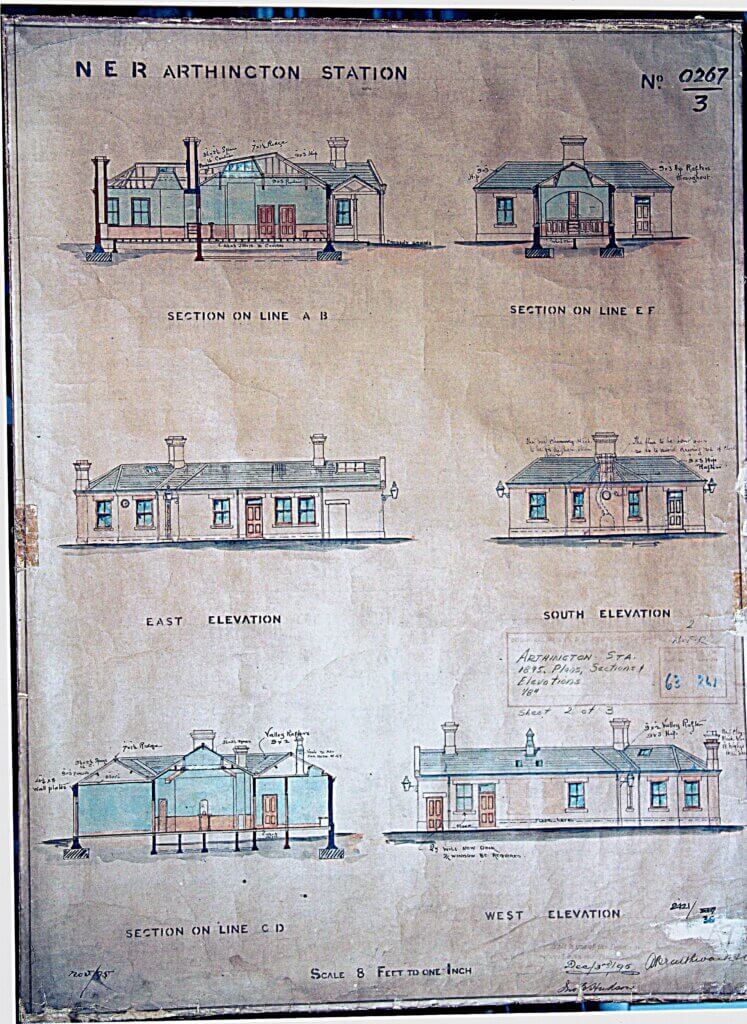
Less than 20 years later a disastrous fire in November 1895 destroyed almost all the station; by December plans to rebuild the station were drawn, shown above.

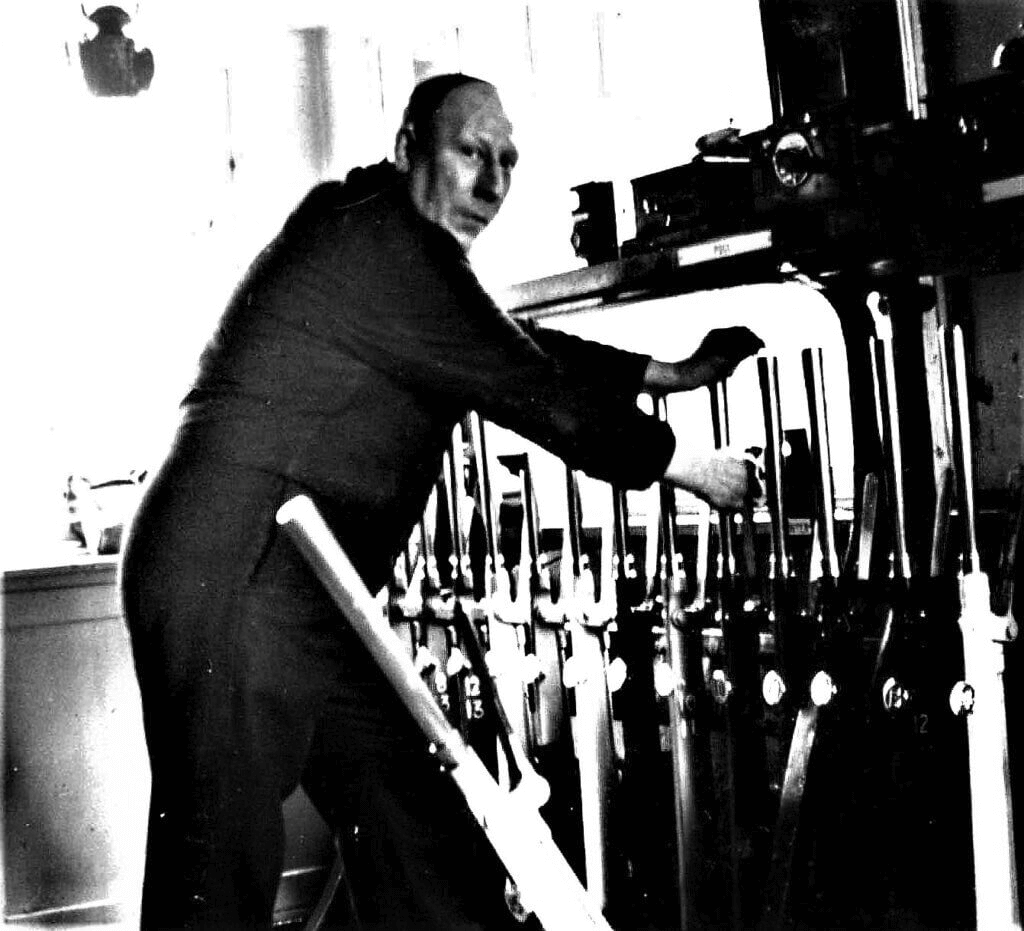
The Wharfedale Branch line was first used on 1st Feb 1865 when a train left Wellington Street, Leeds at 7.a.m. reaching Arthington at 7.26 and Otley at 7.38. At that time there were six trains a day moving in each direction.
Back to Pool Station
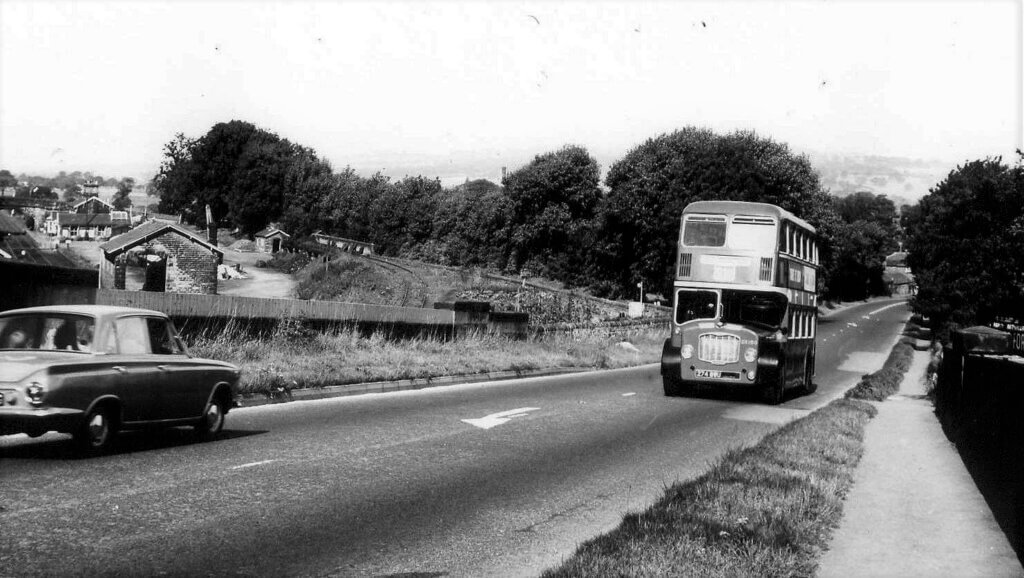
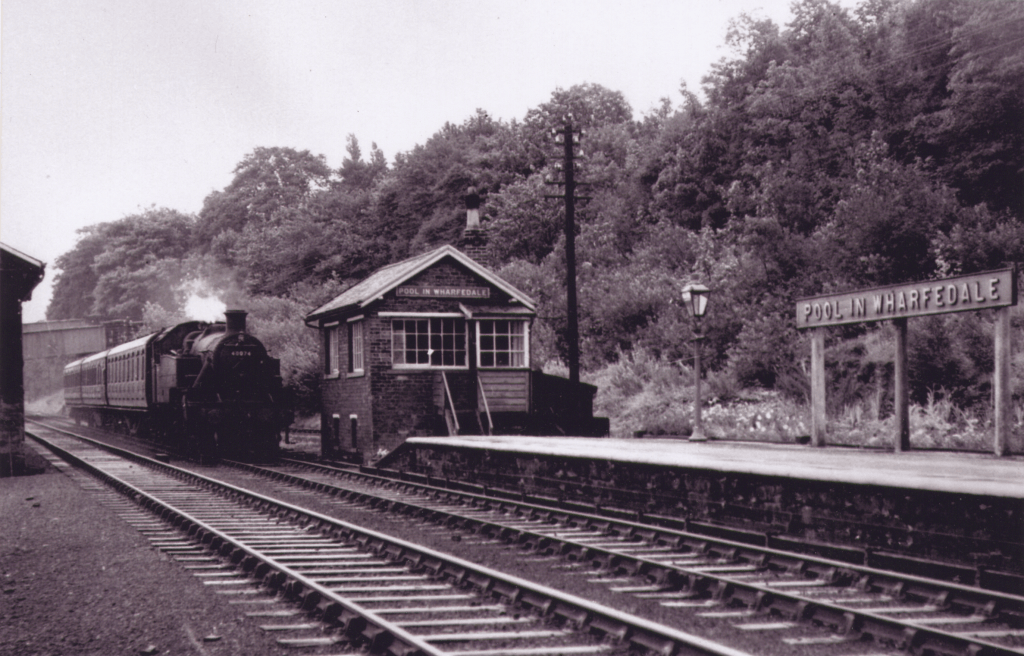
Pool Station from Pool Bank New Road c. 1960
The name of the station at Pool, was again changed in 1927 from Pool to Pool-in-Wharfedale. The station had two entrances. One was directly from Old Pool Bank, just below the bridge, another was off Pool Bank New Road immediately above the Pool-in-Wharfedale Waterworks land. The stone entrance pillars are still visible, adjacent to a garden on Willow Court.
Otley. Mercury 2nd May 1846 The town of Otley has lately been very much improved, in the expectation of a line of railway being brought to it. The old thatched houses are rapidly disappearing and giving way to modern ones of three stories high. The shopkeepers are taking down their old bow windows, and putting flat ones in their place. By far the best one of this kind is that of Messrs. S. & J. Waterhouse, of the Church gates, whose window is ten yards long. Should a line of railway be obtained, a great influx of visitors may be expected in the beautiful and romantic valley of the Wharfe; and Otley, with its pure air and water and splendid scenery, will no doubt obtain a full share of patronage.”
Part of a Parliamentary Bill for the construction of the Wharfedale line, shows the population for Pool(e) was given as 363, with Bramhope 350, Arthington 336 and Otley 3445. No doubt due to the coming of the railway Pool’s population soon began to rise as, after the 363 was recorded in 1846, 1891 records 554 and by 1921 it was 844. By the late 19th century large houses began to be built on Arthington Lane, Pool Bank New Road and Otley Road. These were built mainly by wool and other merchants from Bradford and Otley who now found commuting much easier. In 1891 there were 108 dwellings in the village.
A Very Busy Station

The movement of stone and bricks from Pool Bank Quarries, goods to and from Whiteley’s mill, Midgley’s coal yard, Royal mail, wood, farmers’ milk churns, farm animals, grain, on several occasions circus animals, WW2 tanks and armaments together with civilian passengers, all made for a very active station.
In one year c. 1894, 12/14,000 tons of stone was sent, mostly to Manchester Ship Canal; and Tyne Docks. Seventy-four stones each 7ft 6 inches square and 3 feet thick were sent to Liverpool for the building of a large goods warehouse. 12,000 tons, with each stone weighing 13 tons was for the Midland railway warehouse in Sheffield. (Machine Marketing magazine)
One day during WW2 a train pulled into the siding with the King, Queen, and the Princesses Elizabeth and Margaret on board. The Royal family were here to see troops from the nearby Farnley army camp training in the erecting of a Bailey bridge should Pool bridge be blown up. All this was done in secrecy but excited children from Pool school who were allowed to line the road-side. Memories recall the Queen wearing pale blue and the two Princesses being dressed alike and worrying that they would dirty their shoes as it was very muddy! It is thought that the train remained in Bramhope tunnel through the night. A more than normal number military guarded the station.

A connecting quarry rail line was opened in 1880 by Benjamin Whitaker & Son, owners of Pool Bank Quarries. This ran to the south side of the station. Stone and bricks were brought down in wagons or bogies, from the quarries, using a rail and pulley system, then loaded into railway goods wagons to be transported all over the world. A small dressing shed stood on the south side of the station used by stonemasons from the quarry. (see Pool Bank Quarries).
Wharfedale Observer “1st Oct. 1880 Accident at Benjamin Whitaker and Sons’ Quarry. Wagon came down at a furious rate when the wire rope was not attached correctly. Several masons and railway servants were at work and were naturally alarmed. Fortunately no one was hurt.”

The north side of the station was developed into a busy coal siding, used by Robert Midgley & Son, Pool’s coal merchant and haulage contractor, whose family traded from early 1900 until 1998.
“All the coal used in the village was carted from Pool Station and during the working of the quarry thousands of tons of stone and bricks left the station.” (Holmes Whiteley)

Wagons were loaded with board, some destined for Russia, made by local paper manufacturer of B.S.&W. Whiteley Ltd. Rags were also transported to the paper mill. In the 1960’s further a shipment was made to Russia via Whitby where a ship was commissioned to carry paper board to Riga. There was a large hand operated crane on the north side of the station yard, used for handling goods.

Although the railway had arrived in 1865 allowing goods to be dispatched to customers by rail, an inventory for 1895 showed transport would still be necessary from Whiteley’s paper mill to the station.
The inventory included:
- 1 horse £25.0.0. l foal l ½ years old. 1 wagon £11.0.0. l cart and fittings, set of cart gear, set of harnesses, nearly new £4.0.0. saddle and bridle.
For a business trip to Belfast by William L. Whiteley the expenses were detailed as:
- Leeds (presumably from Pool) 1s.8d. Leeds to Belfast £1.1.0d. and £1.1.0d. return
To avoid the transportation of pulp by canal into Leeds then by lorry to the paper mill, Whiteley’s made an abortive attempt to get a branch line laid direct to the mill.
“The delivery of letters and parcels was much earlier in the morning than it is now. We had a delivery by 6.30 a.m. The letters came to Pool by an early train and were sorted at Pool Post Office. The collection of letters for many years was only once a day and these were put on a train leaving Pool for Leeds about 7.00 p.m. Sunday there was no delivery but one collection. This was by Royal Mail Van, horse drawn. It used to start from Addingham collecting mail bags from Ilkley, Burley, Otley and Pool putting them on a train at Arthington about 8.30p.m. In those days the driver of the Mail Van would give a lift to respectable travellers who happened to be on the road. The local preachers often used this mode of transport to get back to the west end of the circuit, that is if the parson’s chariot had not been able to pick them up.” “ The railway signalmen usually had the latest news They received it on their telegraph system and as there was no law against them imparting it to their fellows, we were not too long in hearing important information” Extracts from “Recollections of My Native Village” by Holmes Whiteley.
In August 1919 “instructions were given regarding an Ilkley-Arthington Sunday evening train cancellation, which evidently only ran during the summer months, and until further notice the mail had to be conveyed by motor van”. (Postal History of Upper Wharfedale – Ronald Ward)

B. S. & W. Whiteley
Until the 1920’s all pressboards at Whiteley’s paper mill were manufactured using jute after which wood pulp was used.
The station was well used by passengers too. In fact by the early 1900’s an extra passenger train to Leeds was warranted. On the 30th June 1929 a special train, starting and returning to Pool, was commissioned when all workers and their families from Whiteley’s mill were taken to an exhibition in Newcastle.
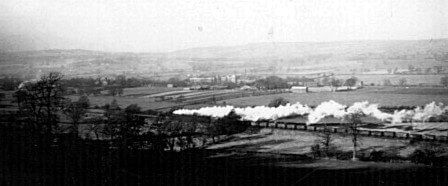
“At one time there would be about 40 contract holders, the price of the yearly contract being varied according to the number of pass holders in one family.
There was a rather serious accident on one occasion many years ago when too much force was given to some trucks while shunting, the result being that the trucks knocked down the buffers and came to rest in the station master’s office.”
Holmes Whiteley
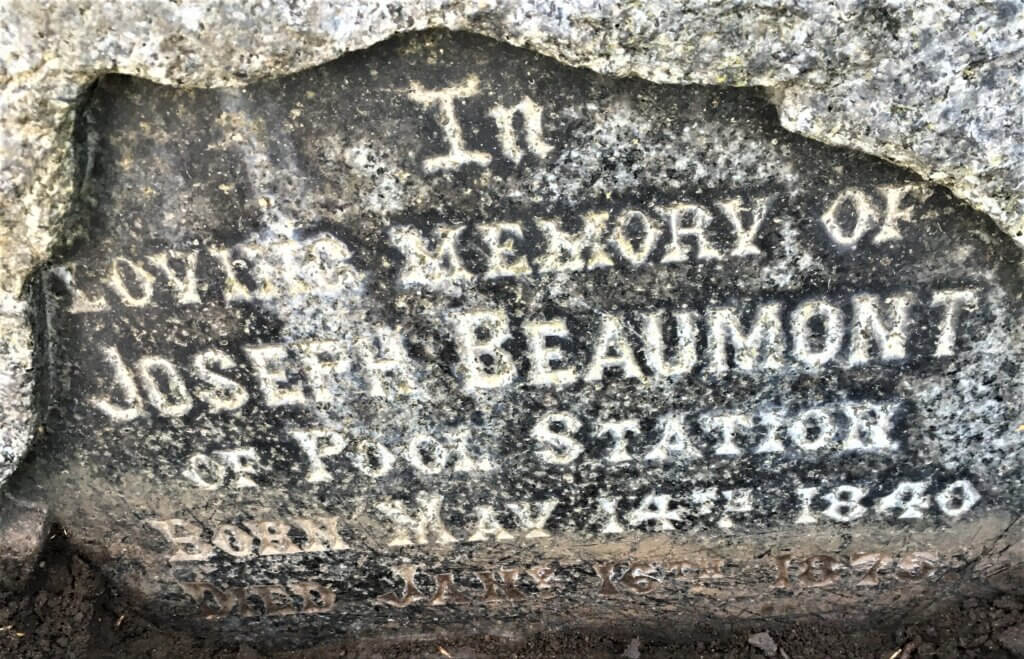
A tomb stone in St. Wilfrid’s churchyard reads, “In Loving memory of Joseph Beaumont of Pool Station born May 14th 1840 died Jany 16th 1875”. The reason for his death is not mentioned. He was known to be living in Pool in 1871 and had previously been employed as a railway clerk in Leeds. John Cousin was porter at the time.
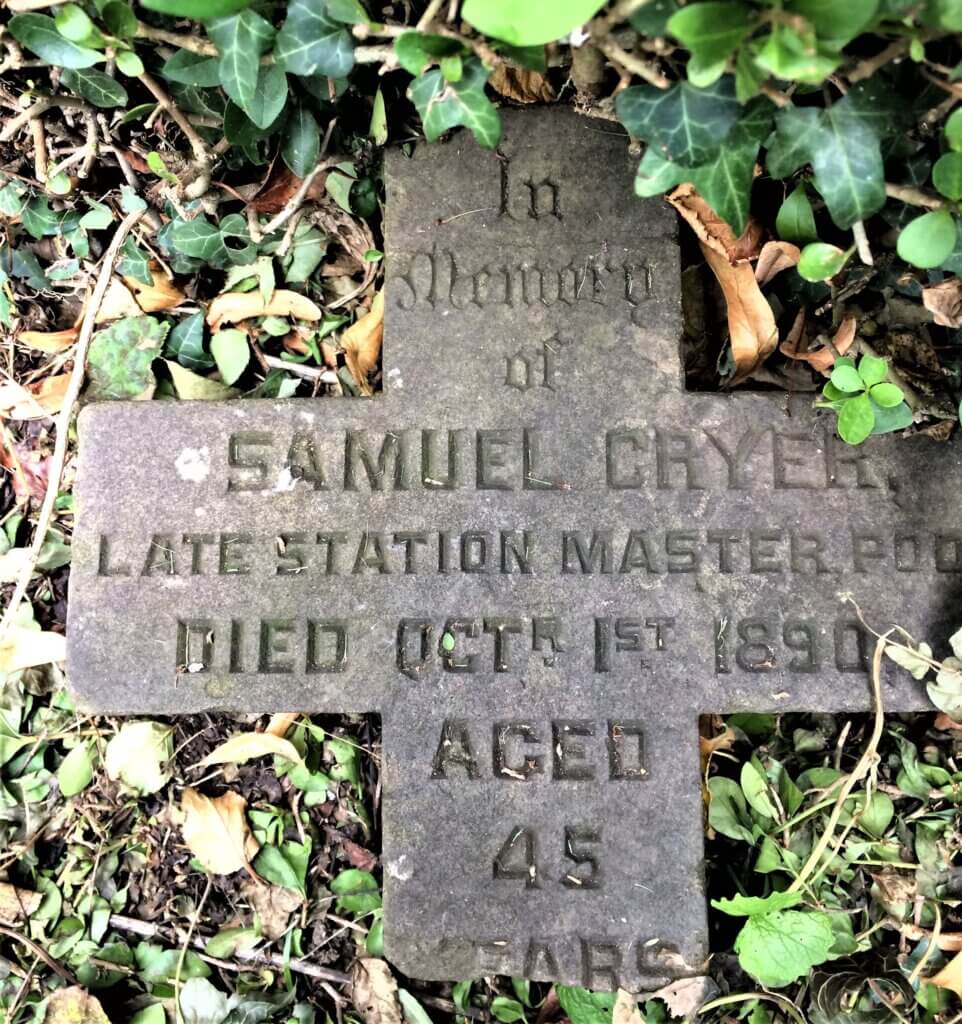
One memorial stone reads “In Memory of Samuel Cryer late Station Master, Pool died Octr. 1st 1890 aged 45 years“
1906 A further fatal accident occurred to Pool station master Mr Allan Haxby (a native of Driffield) He had been shunting some goods wagons when he appeared to slip and fall. He sustained wounds to his arm, head and face, was taken to Leeds Infirmary where he died on 7th April, aged 46. (part Extracts from Driffield Times April 14 1906)
A magnificent memorial, donated by James Bray, is to the memory of the men who died during the construction of Bramhope Tunnel is along side Otley Parish Church yard.

The much used railway service can be seen below:
“Friday lst January 1897. A little frost during the night and a nice bracing air and a pleasant drive to Otley. Called to register a birth at the workhouse and took the 11 train to Pool and registered a birth there. Back to Otley by 12.23 train.”
Extracts from “Timble Man, Diaries of a Dalesman” – by Ronald Harker, Hendon Publishing
“March 27th. 1900. Drove to Otley and took 10.59 train to Leeds and went to Mr. Beever’s office to sign contract for farm buildings at Pool Hall. Contract £750….nearly £100 higher than the next highest tender. No doubt we stand well in reputation for making good work, otherwise we should not have got the job….”
Extracts from “Timble Man, Diaries of a Dalesman” – by Ronald Harker, Hendon Publishing

In October 1905 Pool station was awarded first prize by the North Eastern Railway Company for the “Best Kept Wayside Station.” Again in 1936 the station received third prize in the L.N.E.R. “Best Kept Station” competition for the North-Eastern area. The station master was A. H. Wildon, his staff George Bradley and Arthur Sayner.
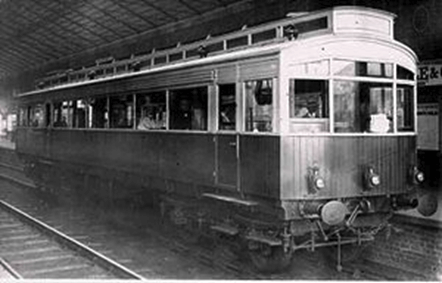
Petrol Electric Autocar in 1903
Invitations were issued for the stone laying ceremony of the Pool Methodist Chapel which took place in 1908. It stated that the North Eastern Railway Company “have kindly consented to stop the new Harrogate Autocar Train, leaving Otley 2.24 p.m. at Pool, on this occasion.” A steam auto-car service had been introduced to relieve the over-crowded rail passenger services and was sometimes called a “push and pull train”.
The Petrol Electric Autocars were built by the North Eastern Railway in 1903 at their carriage works in York. Powered by petrol engines which generated electricity for two traction motors which were mounted on the bogie underneath. This pioneering means of powering a railway vehicle would eventually develop into the diesel-electric technology used on most diesel locomotives worldwide. Numbered 3170 and 3171 they were 53.5 feet (16.3 m) long and weighed around 35 long tons. The engine was mounted in an engine compartment 13.25 feet (4.04 m) long. The rest of the vehicles’ length was taken up by a vestibule, driving compartment and a 52-seat passenger compartment. Two were built and ran until 1930; one has been restored and preserved in working order and can be boarded as part of the North Yorkshire Moors Railway running from Whitby to Grosmont and Goathland.
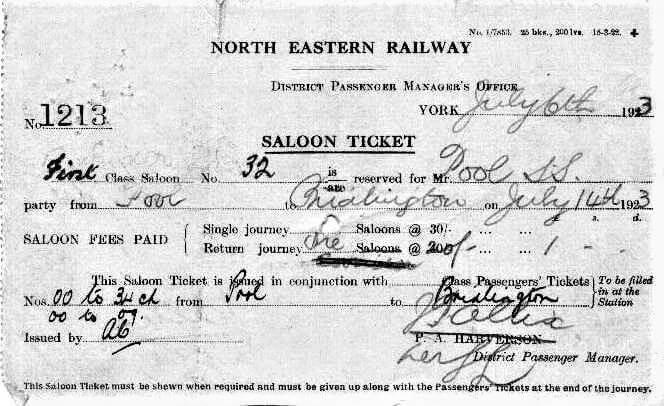
On July 6th 1923 return first class saloon ticket No. 1213 was issued by the North Eastern Railway at York. Thirty four children and nine adults were booked on a return journey from Pool to Bridlington for members of Pool Methodist Sunday School to take place on the 14th July.
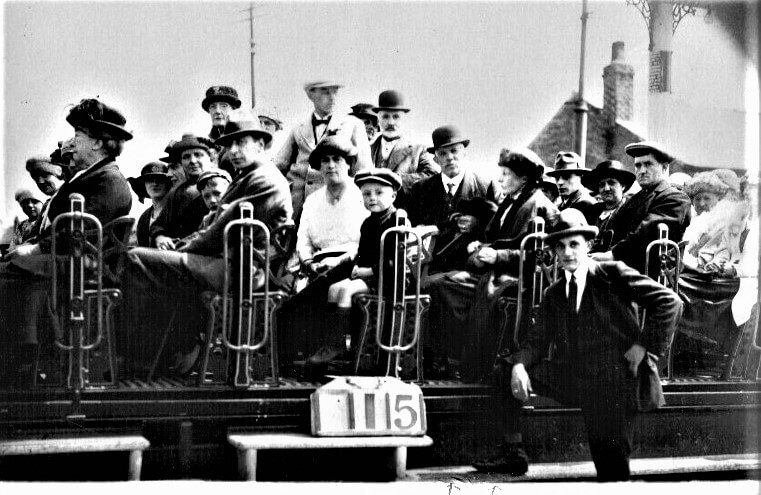
“Toaster” Tram c. 1925.
A group of passengers from Pool on an outing boarded this “Toaster” tram for a trip which ran from Morecambe to Blackpool. Two passengers were W.L.Whiteley (Whiteleys paper mill owner) with his wife Jane who can be seen seated just above the man wearing a trilby hat. leaning on the tram.The lady at the front was Miss Whitehead owner of Pool Waterworks Ltd.
Pumping water from the station to a tank at the top end of Sandy Lobby to supply the cottages with fresh water, was a daily morning task for railway workers. The water came from the pump house situated next to the signal cabin on the station.


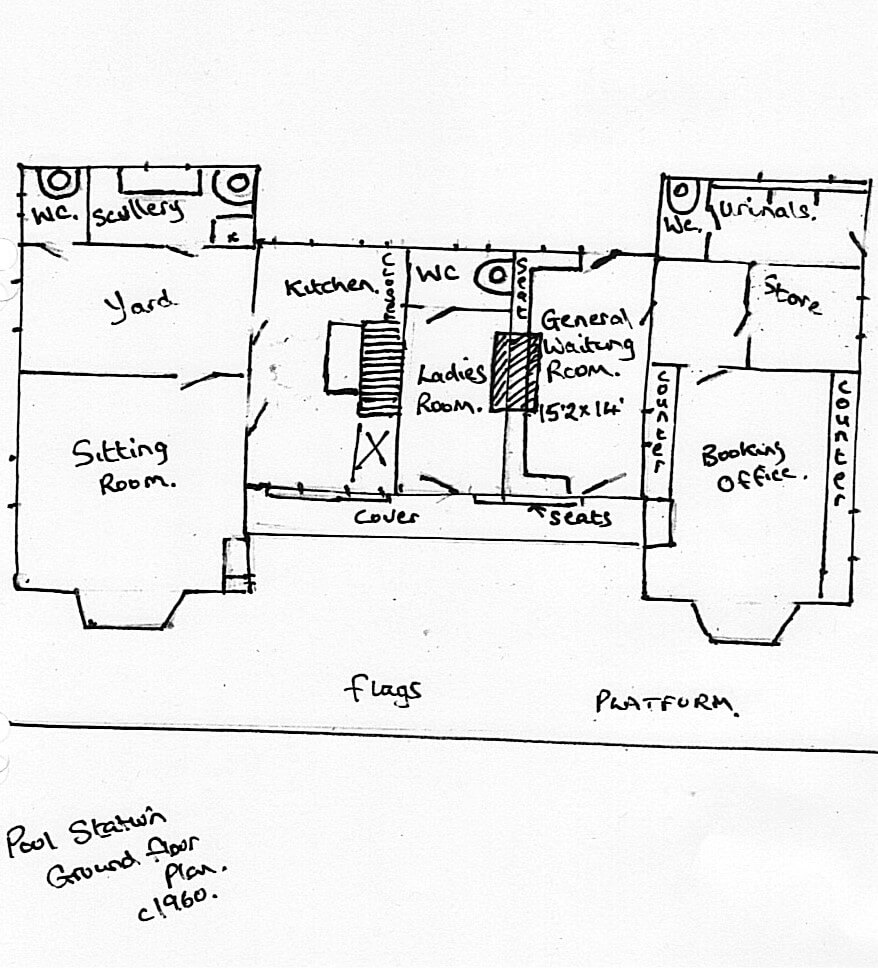
Some Early Memories
- In the early 1920’s an old railway carriage was left abandoned on some spare ground at the entrance to Holmes Farm (Hall Farm). “The local children rigged up some seats and used it as a cinema. Fosters who kept North View Stores, (now converted cottages on Main Street) were considered to have plenty of money owning motor bikes and a cini camera. This was used to play old films, such as Charlie Chaplin.” (Freddie Midgley.)
- There were only horse drawn carts or bikes. The milk floats from the Leathley and Stainburn farms used to come cantering through the village to catch the 6.30 a.m. train for Leeds. The poor horses being lathered in sweat. (Bernard Mitchell. b.1898)
- The local boys would collect apples from the orchard which is now Parklands. They were given to the engine drivers in return for a ride to Arthington on the footplate of the train. (Keith Lupton from tales told by his father, born c.1890).
- Early in the 1920’s a wood wagon, pulled by six horses, would regularly come down from Leathley to unload logs at the railway station. The local children loved it, as the driver would give a lift on the back of the dray from Pool Bridge to the bottom of Old Pool Bank. “At this point we had to get off to allow the horses to pull their heavy load up the hill. Even then they would strain with the weight. For years the right hand wall of Old Pool Bank had a score mark, where the logs had scraped when turning the corner into the station.” (Freddie Midgley).
- In 1930 wood wagons were still using the station “I recall how I used to see big long horse drawn wagons, with wooden wheels, loaded up with big long tree trunks coming along Arthington Lane. There would be six or eight horses in a team, drawing each wagon and I think there were two men to each team. The horses hauled the wagons up the Bank to the station yard. They used to stop for a breather near the wood yard (Kayes on Arthington Lane, now The Beeches) and again near the White House at the bottom of Old Pool Bank, before the final pull up into the station yards. As kids we used to follow them. The horses were very big and strong.” (Kendal Newby.)
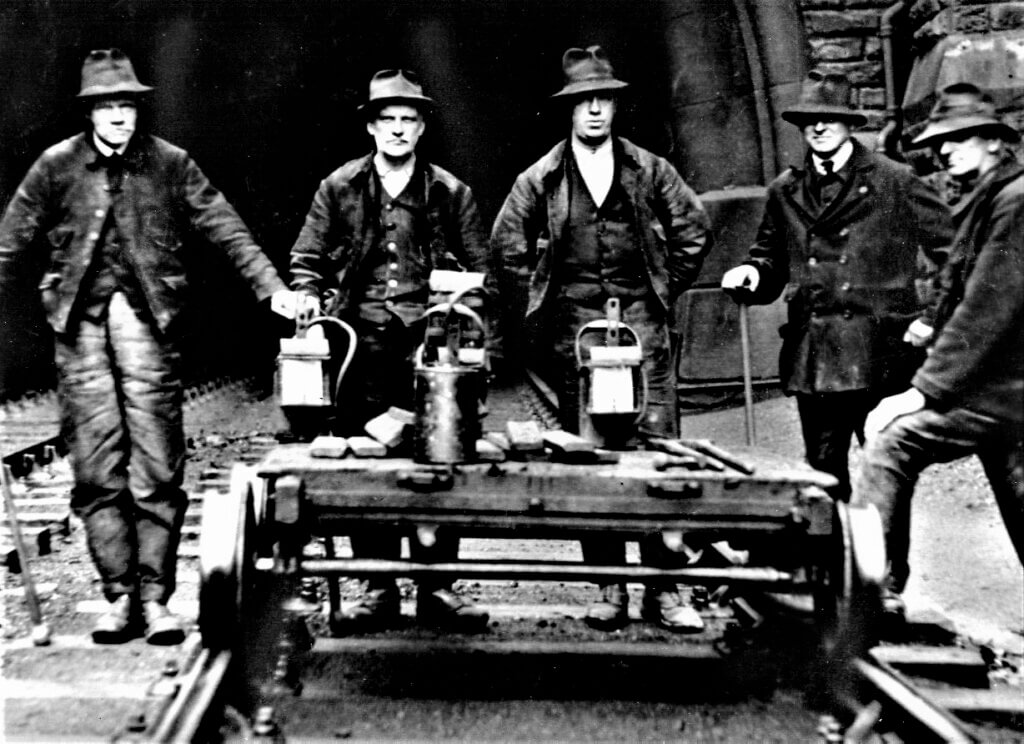
- Railwaymen who worked in Bramhope tunnel wore mole skin suits to keep them warm, they would often emerge with icicles hanging from their helmets! A fire would be lit under the ventilation shafts to melt any hanging icicles which might damage the trains as they passed through the tunnel. The men also made sure that their trouser bottoms were tied with string to prevent rats from running up their legs! (Mrs. Webster whose father and grandfather worked in the tunnel and lived at Arthington are shown above)
- Mrs. Holmes, the local farmer’s wife lived at Hall Farm, Pool. Before her marriage she had lived near Leathley where her family farmed. Milk churns had to be delivered to Pool station. If the train was seen coming along the hillside from Otley they knew they would be too late, so would catch up with the train at Arthington. At one time they had cattle transported to Pool from Scotland. (Dorothy Homes)
- On several occasions the circus arrived by train into Pool Station. One day during the 1930’s the animals, including elephants, walked down Main Street. Billy Webster’s father was a keen gardener. He and other villagers were delighted to see the plentiful supply of good manure! (Billy Webster)


The Uses of the Station during WW2
The station was a hive of activity during the Second World War. New tanks and stores arrived from Leeds armament factories to be stored at Riffa Camp and Farnley Military Camp. A special ramp was built.
One night in 1941, Joseph Bateson, a Leeds tannery owner, lost his life when returning to his home, Fairlea, (now White Croft) on Arthington Lane. His chauffeur driven Rolls Royce was in collision with a tank which was without lights because of wartime blackout restrictions. It had turned into the station when the car ran into the rear of the tank.
As Otley Bridge was not considered strong enough to take this heavy traffic and the route through Otley tortuous, Pool Bridge and Pool Station were used. When a particularly heavy piece of equipment was moved to the Camps it was unloaded at Arthington Station and driven across the river at Arthington’s ancient Castley Ford.
At one time a large movement of tanks rumbled through the village which were thought to be en-route for the Normandy Landing. About a week prior to all this activity the base camp at Farnely was, at different times, visited by King George, Winston Churchill and Viscount Montgomery.
Police help was requested when, in March 1942, military traffic through the village had increased to such an extent it had become a danger to children crossing the road to school. (Minutes PPC)
Wartime Memories
- During WW2 the king and queen are believed to have slept in two royal carriages which were parked overnight in Pool-in-Wharfedale station. The station had a very heavy military patrol all that night. The station and track to Arthington was always patrolled by the military during the war. (Bill. Rider) (Now believed the train was overnight in Bramhope tunnel)
- One of the outhouses of the White House, Old Pool Bank, was used as a bakehouse for the military. The signal box at Arthington Junction was always immaculate inside. No one was allowed to touch the shining brass controls. Even the signalmen used dusters when operating the signals. There was a small “Range” where dinner was cooked. It was always cleaned and black leaded. There were carpets on the floor. During the war fuel was scarce. As the train went by, if asked, the engine driver would throw a shovelful of coal in the direction of the signal box. (Various)
- The station and the line to Arthington were always heavily guarded. There was a narrow field between the station and Avenue des Hirondelles where the army regularly patrolled.
- Six strong horses were used to move felled trees from an area above Pool railway bridge. They wore long protective boots on their legs. Each evening these were removed and hung on trees – “strange to see”. (Bill Rider)
- A bomb was dropped at Arthington, possibly aiming for the railway viaduct. No one was injured as it landed in a field and killed the odd cow. Initially residents of Arthington used the railway arch leading into Creskeld Hall field as an air-raid shelter. After the bomb dropped it was decided perhaps this was not the safest place to be.
There is a turret on the north end of Bramhope tunnel which at one time was the home of railway people. This was renovated by the War Department and used by a security guard. (Mrs. Webster.)

Over either entrance to the tunnel there is a face, one smiley, the other sad, placed there to represent all the men killed during its building.

Bramhope Tunnel Plans for the northern portal, “Bridge No.26, Mileage 6 mls 70-50 chs.”
This is part of the plan for the building of the tunnel entrance which shows the Signal room and accommodation for the railway worker and his family. In 1851 the census shows it was home, at Bramhope Tower, to Samuel Paling plus his family of five. His wife, 3 children, mother-in-law and himself in three rooms. “Further investigation confirms his position at the tunnel portal was that he was working the telegraph. For me the inclusion of “Signal room” on the ground floor is most interesting, that to my mind confirms the use of the larger tower as a telegraph station to control the passage of trains through the tunnel. Still not sure what there was at the other end, although there was a small stone “block house” atop the retaining wall between the south portal and the first overbridge.” (Neil Mackay 2023)
During WW2 the military moved into the Tower to oversee the viaduct and tunnel.
Leeds Mercury 31 st Oct. 1846 “We stated last week that a large additional supply of most excellent water might be had from the works of the Leeds and Thirsk Railway at Bramhope and suggested that powers should be obtained from Parliament to make this water which now runs to waste, available for the use of the inhabitants of this place.
Gas Works (Arthington Junction)
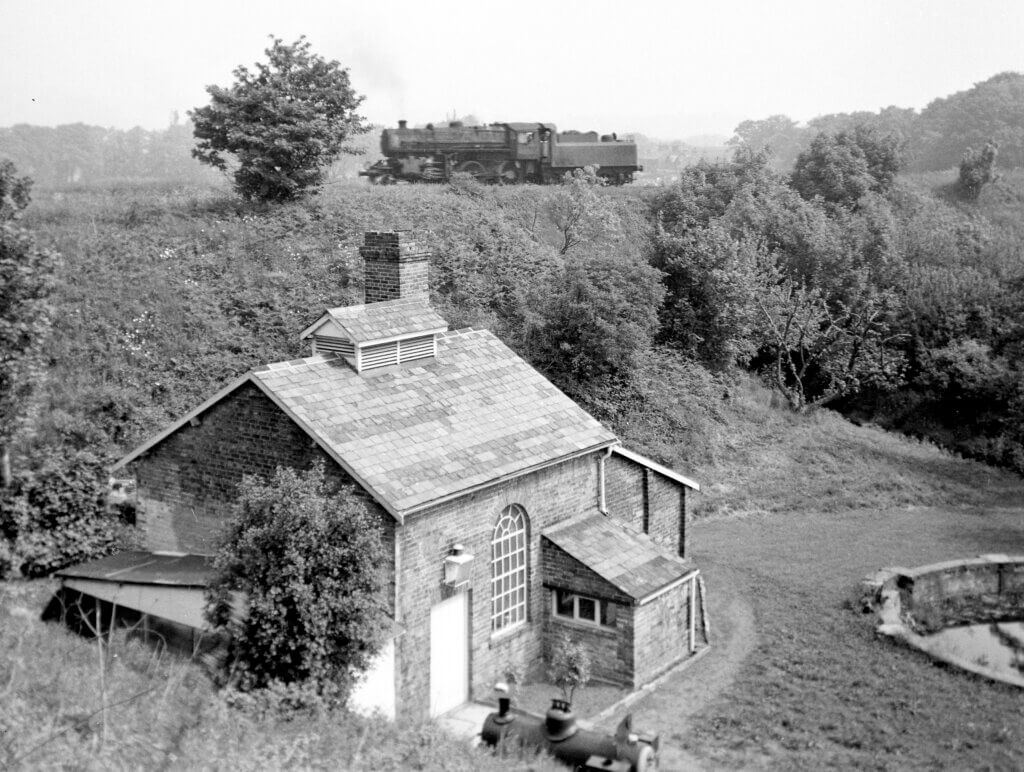
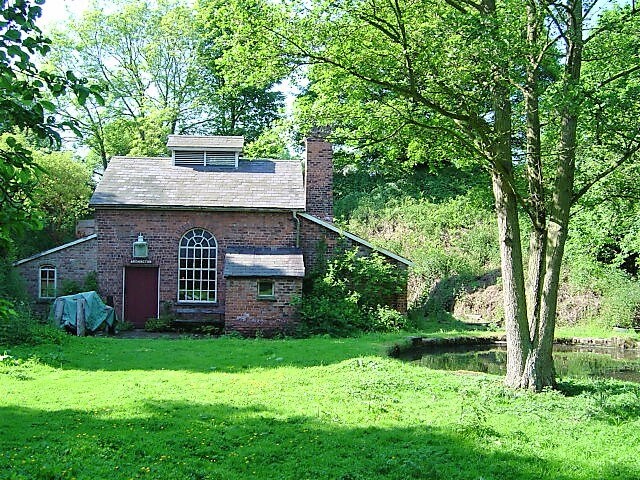
The gas holder tank area can be seen on the right. When this photograph was taken it had become a pond, home to many newts. Unfortunately wooden boarding now obscures this area.
Arthington Gas Works (Grade II Listed). Built in 1876 closed in 1905. Gas had been bought from a local manufacturer Mr Stead since 1856. When his Arthington home beside the railway, Arthington House and farm, sold in 1860 he was described as “Railway Contractor.”
“Coal gas would be used to light the station platforms and offices, the subway, probably at least part of the approach road, the three signal boxes, the signals, and (probably) the tunnel when maintenance work was being carried out. Pool Station was supplied from Arthington shortly after the works opened (see below) and it appears that St Wilfrid’s church in Pool may have been supplied – NER Minute 21011 of 23 October 1880 reads, “Application having been made on behalf of **Mrs Wood (Caley Hall) for a supply of gas from the company’s works at Arthington to the church at Pool, resolved that a supply be granted at 5s 0d per thousand cubic feet, the company being put to no expense for pipes, etc. Mr H Copperthwaite [the NER Engineer at York] to make the necessary arrangements.
(Arthington made coal gas, not to be confused with oil gas which was made in a special works at Leeds and used for carriage lighting until replaced by electricity). Coal for the works was tipped down a chute from a siding on the south to west curve, probably from one wagon.
The NER Finance Committee noted in 1874 that it cost 10s 6d per thousand cubic feet with the annual consumption around one million cubic feet.
Small gas works like this soon became uneconomical and closure was authorised in 1905. The stations at Arthington and Pool (and presumably Pool church) were converted to oil lighting.” (Neil Mackay, N.E.R.A.).
“RAIL 527/32 (at the National Archives in Kew) is the NER Loco & Way & Works Committee minute book for 1875-6. Minute 16890 of 22 June 1876 reads “Resolved that Pool station be lighted with gas from the company’s gas works at Arthington and that the cost of the necessary pipes and fitting estimated at £100 be charged to capital.” RAIL records by kind permission of, and transcribed by, Neil Mackay,Chair, North Eastern Railway Association).

**Mrs. Wood of Caley Hall. Mrs Wood, wife of George Wood Esq. M.A. Oxon, of the Inner Temple, J.P, died in 1879 age 54. He had been a director of the Lancashire & Yorkshire Railway and took “a keen interest in Pool school”. In 1880 Mrs. Wood applied for lighting to be extended from Arthington Gas works to St. Wlfrid’s church in Pool, (that same year she gave to the church the pulpit and alter table). The minute book for 1880-81. on 23 October 1880 reads “Application having been made on behalf of Mrs Wood for a supply of gas from the company’s works at Arthington to the church at Pool, resolved that a supply be granted at 5s 0d per thousand cubic feet, the company being put to no expense for pipes, etc. Mr H Copperthwaite [the NER Engineer at York] to make the necessary arrangements.” (Neil Mackay)
END OF THE LINE
The last permanent Station Master was Norman Plummer from Pannal after which various relief personnel took over.
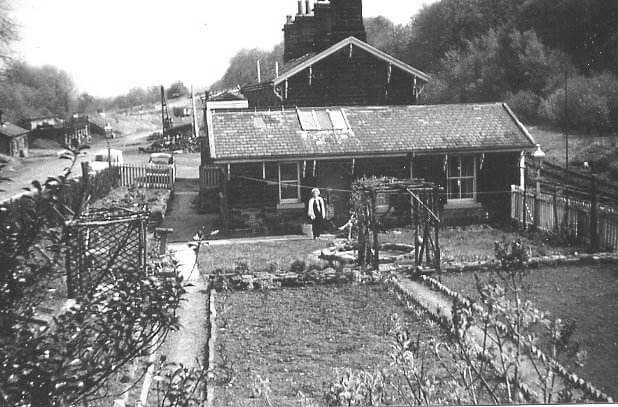
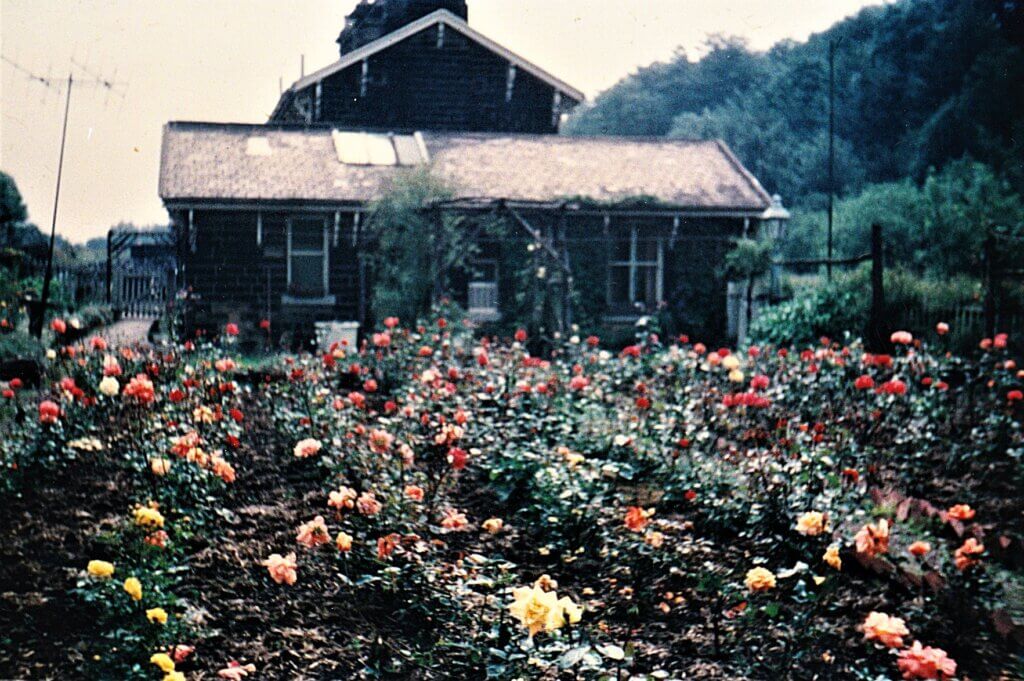
Joe Sutton, who was the final occupant of the station master’s house, was a keen gardener. When the station building was finally demolished in 1974, during the building of the small housing development of Willow Court, villagers took away and planted his prize roses where they continued to bloom for many years.
In 1894 the timetable for passenger trains from Leeds to Ilkley were published in the Wharfedale & Airedale Observer. In January they ran from Leeds stopping at Holbeck, Headingley, Horsforth, Arthington, Pool, Otley, Burley, Ben Rhydding and Ilkley. The first train left Leeds at 7.55am arriving in Pool at 8.27am with the last train leaving Leeds at 9.05p.m. arriving at Pool at 9.40pm. Seven trains ran daily in each direction.

The train timetable for 1962
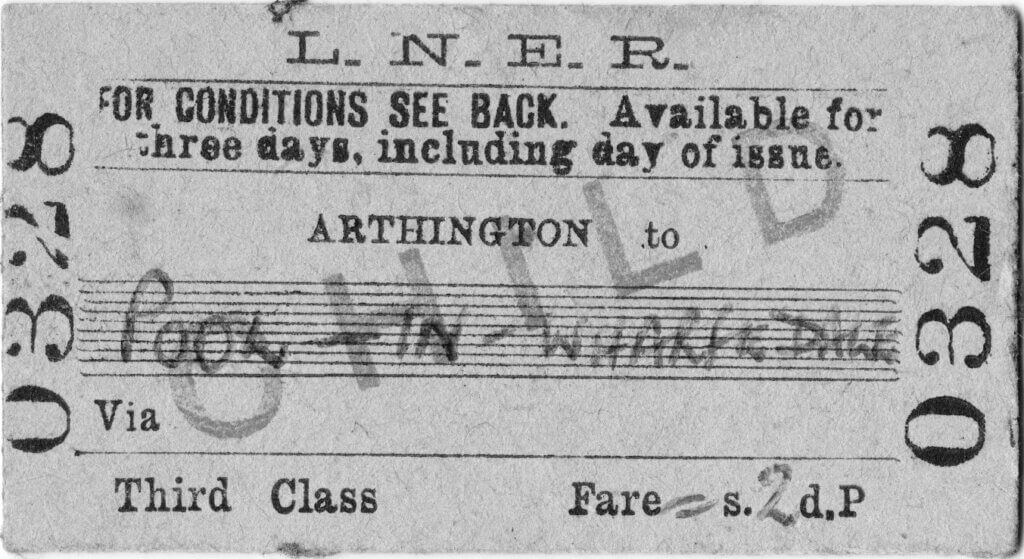
Below Child’s ticket from Arthington to Pool-in-Wharfedale with the fare at 2d. third class.


The last passenger train on the Arthington to Ilkley line left on 20th March 1965.
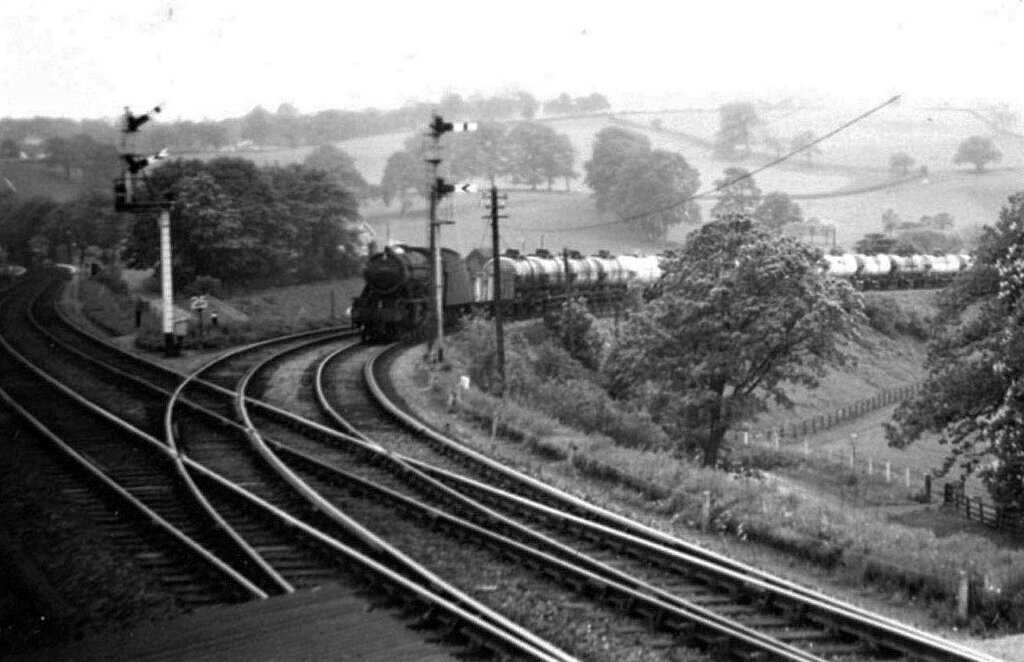
Regular freight trains continued to use the line, mainly carrying ammonia from Lancashire to I.C.I.at Billingham. Pool station handled goods traffic until the line was completely closed on 5th July 1965 – exactly one hundred years from opening. The railway lines were taken up in May 1966 with sections of the land sold off piecemeal.That part passing through Whiteley’s properties was sold in 1967. As plans were still being considered for a Pool by-pass David and John Whiteley, who were involved in local government, insisted on a minute being included. This allowed resale to the highway authorities if it were required for a by-pass route. (David Whiteley Memoirs & John Whiteley Railway Closure.)John Whiteley, Chairman of the Ripon Division of the Liberal Association, Otley Branch and grandson of one of the founders of B.S.& W. Whiteley Ltd. campaigned very strongly to keep the line open. When it became apparent this would not happen and seeing the increase in road traffic, he requested the railway land be made available for a Pool by-pass.
The importance of this possibility resulted in a question being asked in Parliament on 30th March 1965 by Sir Malcolm Stoddart-Scott M.P. of Creskeld Hall, Arthington. On the 29th April 1965 a letter was received from the Ministry of Transport acknowledging that the railway land in the Wharfe valley could be converted into a road and would write again as soon as possible. A letter eventually confirming this “consideration” was being made was sent on 17th Jan. 1966. A postcard from the Ministry of Transport dated 26th Jan. 1966 in response to a further letter was received by John Whiteley which stated the matter was “receiving attention.” Nothing more was ever heard.

a by-pass 1965
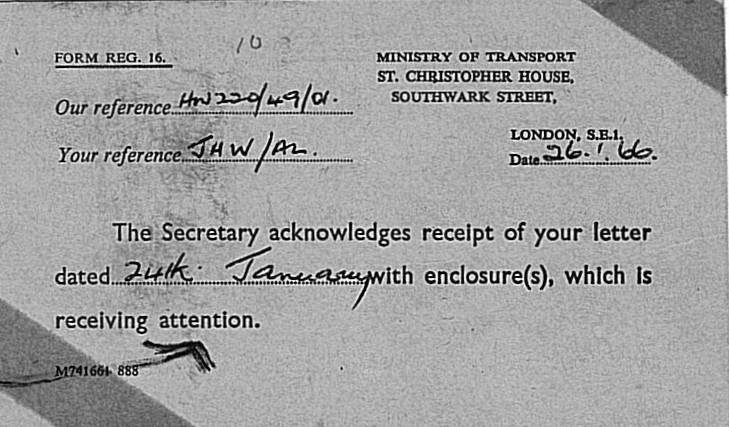
The final correspondence from the Ministry of Transport
After the closure, an area of land including the station, was sold by William Whiteley as building land. Whilst preparing this site for Willow Court, a king pin weighing eight tons was unearthed. This was no doubt part of the crane which had been used at the station.
The Railway at Pool Hits the News
Extract taken from Leeds Intelligencer and reported Morning Post 1st October 1845. “Valley of the Wharfe: The Leeds and Bradford Valley Company have also surveyed and propose to make a line from Shipley to Otley and Arthington: and last, although not least of these important undertakings, is the projected Leeds and Carlisle Railway. It is expected that very shortly the Leeds and Thirsk Company will announce their extensions to this neighborhood.”
Halifax Guardian in 1847.“Pool Feast was this year signalised by a disturbance of rather alarming character. The neighborhood, it appears, is inundated with navvies employed on the Leeds and Thirsk railway, now in course of construction. A young man named William Mounsey of Otley went with his dulcimer to the Half Moon Inn where a number of these semi-barbarians were assembled for the purpose of having a dance. Mounsey played for while, but not receiving adequate remuneration for his services, left the house and went to the White Hart Inn. There, meeting with a fiddler, they played to a select party of villagers, among whom were Messrs Thomas Bray and Milthorp.
At a late hour, the house was attacked by a number of navvies who had come to demand back their musician and a scuffle ensued, several of the dancing party being severely treated. Mr. Bray escaped under a bed but, being discovered, was dragged forth in a brutal manner. The constable, with the assistance of several of the dancers, attempted to clear the house. This was effected, but not before several of them had suffered rough treatment, Mr. Milthorp narrowly escaping strangulation.
Whilst this was going on, Mr. Ackerby, the landlord, rather injudiciously fired some small shot out of the window, hitting but not injuring some of the riotous gang. First throwing a stone through a panel of the door, the rioters broke it open with a crowbar and, after breaking doors and windows in all directions, ransacked the house in search of the landlord, whom they threatened to murder. Mr. Ackerby retreated into the spirit vault, where he was locked in by his servant. The rioters, baffled in their search, went into the dairy and cellar, where they amused themselves by dashing bowls of milk, bread, meat, etc. upon the floor, and trampling them.
Mr. Akerby’s servant, fearing for his master’s confinement and rushing from the house, he buried himself in a stack of hay, not far distant. The landlady had a narrow escape. One of the villains attempted to plunge a knife into her breast, but the deadly weapon slipped on one side, passing through the sleeve of her dress.
The report adds: “We are glad to find that four of the villains were secured. They were brought up at Otley the following day, heavily ironed and being taken before F. Bilham, Esq. on the charge of riot and assault, were by him committed to take their trial at the next Wakefield sessions. Seven of the gang made their escape and have not yet been apprehended.”
Taken from a news cutting of Nov. 1845 during the building of Arthington viaduct and tunnel. “We found that many of these men abstained from the use of strong liquors and that the persons who pursue this temperate course go through their work well, enjoy as good health and have more the appearance of long life than those who spend a considerable part of their wages in beer and spirits. The wages of workmen employed in this kind of labour vary from 20s. to 24s. a week and the persons employed as miners will earn 6s. a day.”
Wharfedale & Airedale Observer. 13th June 1883. “Miraculous Escape. Whilst a party of excursionists 15 or 16 in number from Leeds were proceeding round the sharp curve on the Pool Road, nearly opposite the White Hart Hotel, Pool on Sunday last, a waggonette in which they were riding was capsized by the sudden turn and the occupants precipitated into the middle of the road. Beyond the fright and a few bruises the party escaped unhurt but had to return home by train.”
Extracts compiled from various news reports of the day
The three and a half ton foundation stone for the Wharfdale Viaduct was laid on 30th March 1846 accompanied by the sound of cannons and two bands. One band headed by a large procession, left Pool, to be joined by another from Bramhope. Dignitaries of the Leeds and Thirsk Railway and many thousands of people from the Aire and Wharfe valleys attended the ceremony which took place at Castley. Later directors and friends enjoyed the hospitality of Mrs. Beanland at The White Hart Inn, Pool, whilst workmen, who had been given a day’s holiday, were fed and presented with twelve large barrels of ale, a gift from the contractor James Bray. Mr. Bray considered all the stone removed from Bramhope tunnel was of good quality and was expected to provide stone to build nearly all the viaducts, bridges and masonry work along the line.
The last arch was keyed in during July 1848 with the final “topping stone” laid in December 1848

Station Masters, Pool:
To 1868 HENDERSON, Richard D (thence to SM [station master], Holbeck)
1868 to 16/01/1875 BEAUMONT Joseph (Died 16/01/1875)
03/1875 to 05/1885 RAYFIELD Joseph Thomas (was clerk, Leeds, thence to SM Picton)
06/1885 to 1890 SWALES John (was booking clerk, Leyburn)
10/1890 CRYER Samuel (died 1/10/1890)
10/1890 to 09/1897 ROBSON Frank (was SM Wetherby)
11/1897 to 07/1900 HORNER Charles (was parcels clerk, Thornaby, thence to SM Haxby)
07/1900 to 10/1901 ROBSON Thomas (was clerk, Crook, thence to SM Byers Green)
12/1901 to 04/1906 HAXBY Allan (was relief clerk, Leeds, killed in shunting accident 04/1906)
05/1906 to 03/1917 ENGLAND William (was SM Bolton Percy, retired 1917, died 11/1938)
06/1917 to 05/1923 SPENCE John H (was SM Glaisdale, thence to SM Pateley Bridge)
06/1931 – 03/1945 WILDON Arthur Herbert (was relief SM, Leeds, retired 1945, died 11/1955)
@ 1949 PLUMMER Norman
1945? to 04/1960 SELLARS Charles R (retired; died 11/1962)
(Courtesy Nicholas Fleetwood, North Eastern Railway Association & Neil Mackay NERA)
1960? to 1973 Joe Sutton (Final occupant of Pool Station)
(For more on Arthington viaduct, its construction, photos etc. see “Arthington Viaduct” )