
How old is the road? Fish breeding ponds are mentioned in Pool in documents of the late 12th century, situated alongside what was “possibly the major route along the southern side of the Wharfe valley connecting Skipton with Harewood via Ilkley and Otley” .(WYAS, Leeds Library AD 1500)
How it all began
The Turnpike Act of 1662 stated that a toll was to be collected and the money raised be used to improve the state of roads. A turnpike or toll bar was a gate set across a road to stop carriages, carts, livestock, etc. from passing until the toll was paid. Originally a frame set with spikes was used to prevent passage.
During the eighteenth century there came a need for traffic to travel more quickly east/west, between Otley and Tadcaster to meet the Great North Road. Local landowners and gentry including the Lascelles of Harewood, Thomas Arthington and members of the Fawkes family and Charles Sheffield became turnpike trustees. They obtained an Act of Parliament which enabled them to erect toll-bars and levy tolls to maintain the roads.
The act described the existing road as, “ruinous and bad.. that in the winter season it is impossible for wagons or other wheeled carriages to pass along the same and very dangerous for travellers”. A rough plan dated 12th Feb 1753 was drawn up and work began. But ordinary people throughout the country were opposed to tolls being levied.
On 23rd June 1753 an angry mob of two hundred pulled down the toll-bar at Pool, just nineteen days after it had been built. They then marched along the road to attack Harewood bridge turnpike, but as they surged through Arthington, were met by the mounted trustees of the turnpike who were meeting at Arthington Hall. The mob was eventually turned away. The following day they again gathered near Harewood toll-bar where a pitched battle ensued between Edwin Lascelles of Harewood and his armed retainers. The mob was eventually beaten off. (Don Cole)
In 1816, another road which was turnpiked ran south/north through the village from Dudley Hill (on the Bradford/Wakefield route) to Killinghall. The road at that time was considered barely passable in bad weather. The route originally ran via Pool, Leathley, Beckwithshaw to Killinghall. The following year Pool Bridge was built over the River Wharfe to replace a ferry.
Pool Toll Bars
Some bar houses were purpose built, as with Pool Bank Chain Bar, at the top of Old Pool Bank (road) whilst others were converted houses usually with a bay built on the front used for the collection of toll money.
The “Turnpike” man lived at the Bar House. It was his job to collect the tolls to help to pay for the maintenance and repair of the road. In the 1860’s he was paid one pound every two weeks.
The keeper of the turnpike or toll bar would usually have another occupation. Shoe making and repairing was popular as this enabled him to work at his window whilst looking out for passing traffic, etc. Tolls ceased to be collected in 1874.
The number of toll bars in Pool is uncertain. Five were definitely in the village. Two can be seen today with a further two shown on old maps and the possibility of another two.

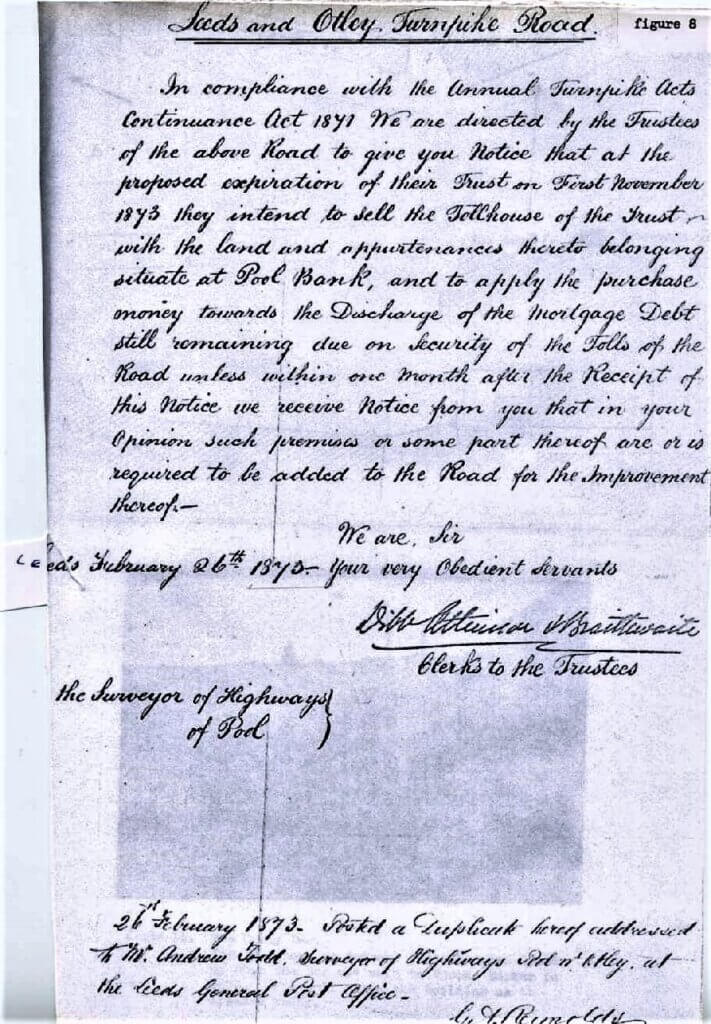
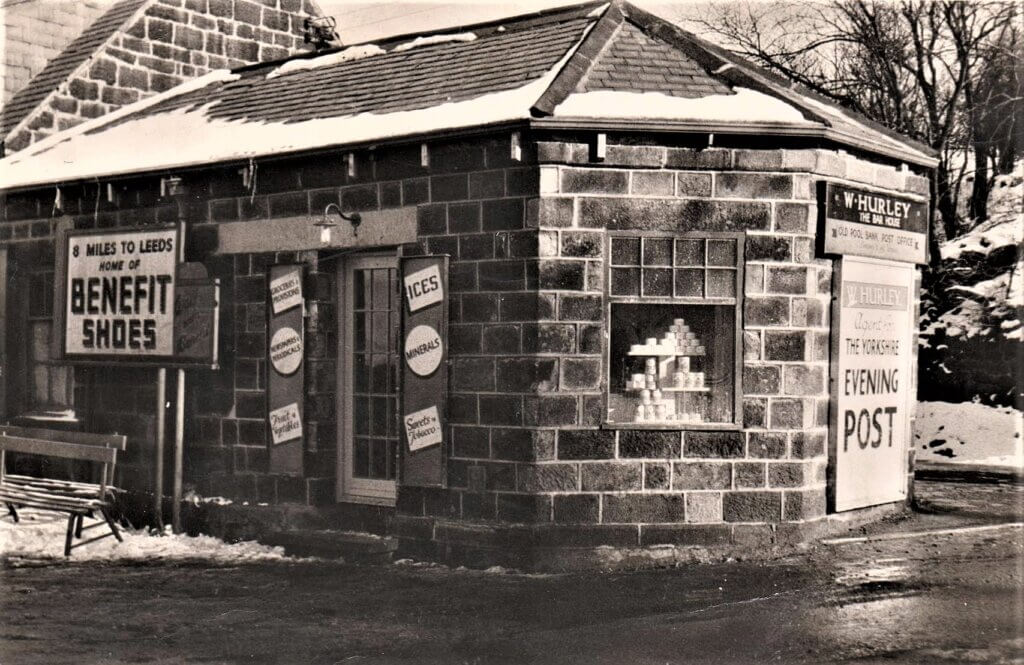
The one seen above, is Pool Bank Chain Bar at the top of Old Pool Bank, built in 1847 following construction of the A.660 Otley/Leeds Road in 1841. The occupant in 1851 was Ann Spencer and her son Thomas. On the dissolution of this Trust in 1874 the house was sold for fifty pounds. This was later converted into a Post Office and general store and has recently become a private residence. The charges made at this Chain Bar in 1845 and 1847 can be seen later.

Here is The Bar House still on Arthington Lane, (see also photo above of “c.1890“) built in the mid 18th century, to the east of the “White Hart” car park. In 1756 a cottage with land stretching to the river Wharfe was no doubt this Bar House. The area was known as Sparrow Close, owned by the Lord of the Manor of Pool, Thomas Thornhill.(Map of 1756 shows) In 1669 a John Sparrow was the only remaining Roman Catholic in the village refusing to join the Church of England.
Tolls ceased to be collected on 1st November 1847 and sometime after that date, when bar houses were no longer required, a conversion took place. There were then two cottages which both sold for a total of £205 after the sale of property of the Manor House Estate held on 25th July 1902, half of the Bar House became a general grocers until 1983 then a pie shop, eventually closing in 1994. The other half was a haberdashers shop around 1900. The two cottages were again converted to one private house in 1997. The last bar house keepers were William and Arabella Steele, Arabella died in 1886. On the photo above can be seen the original “bay window” from which tolls would be collected. Also a blocked out upper window which was possibly where the keeper could have a better view of oncoming “traffic”.

This photo of “Old Toll Bar” shown on the Jennings map of 1767 as “Toll Gate”, was at the junction of the Castley, Leathley, and Pool roads. In 1818 it became known as the Leathley Turnpike, later to become a police station. It was demolished in 1910. The last Toll keeper was Susy Horner. On the map of 1847 the road to Leathley is shown as the Killinghall, Harrogate Road.
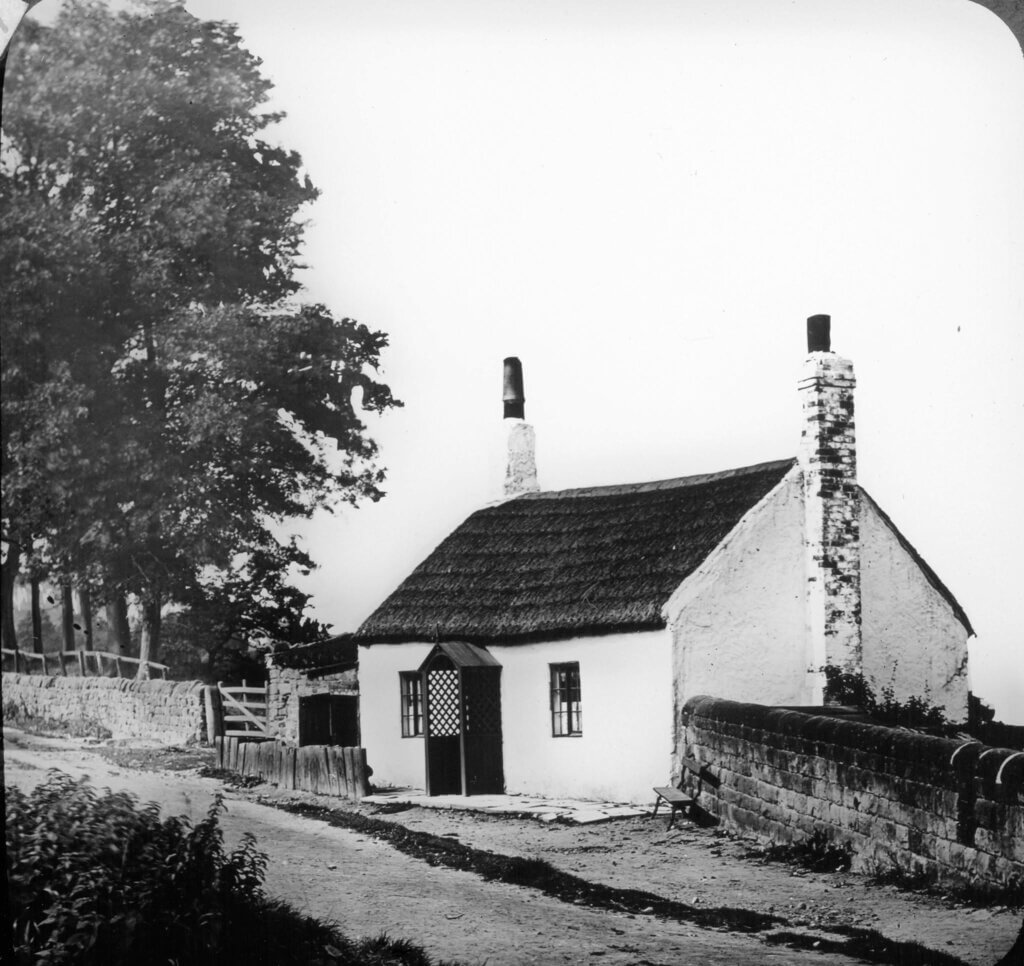
The White Cottage Old Pool Bank 1890

“Turnpike Bar” is shown on the Award map of 1774 standing at the bottom of Old Pool Bank, (road) then known as Bradford Road which connected to Ribbon Lane, a road which longer exists. Ribbon Lane was the main route to Bramhope via Staircase Lane used before the building of Pool Bank New Road in 1816. The house was still on the Tithe map of 1849 occupied by Elizabeth Burton.
According to writings in 1929, another toll bar was on the site of the Shell petrol station. This is very likely, as an old map shows a township gate here leading into the village. In the Award map apportionment of 1849 there was a cottage and garden occupied by Edward Greaves on this site, who incidentally ran the Fox and Hounds, a beer house on Chapel Row.
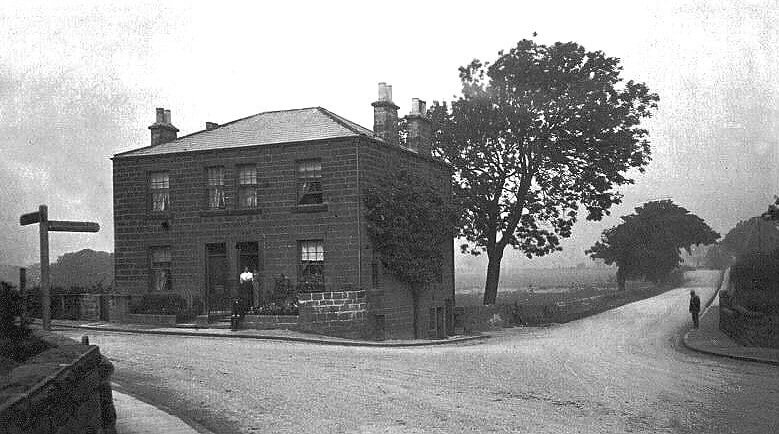
It is understood the cottage was knocked down and two cottages named Fir Tree Cottages were built, to be replaced by the Shell petrol station c.1960. This further Toll bar or chain bar was erected in 1818 “a Side Bar Gate or Chain shall be placed at the end of Leathley-Bridge across the road leading towards Otley, to collect “Tolls or Duties” (Leeds Mercury)
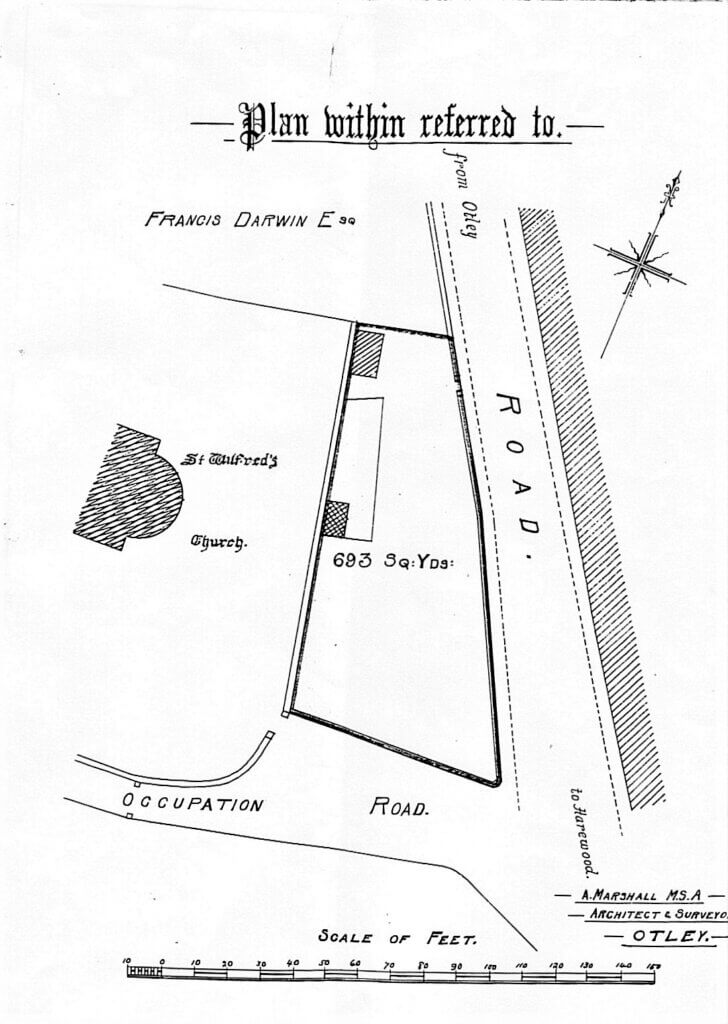
The map of 1756 shows a further township gate at the entrance to the village, near to St.Wilfrid’s Church. There were three houses on the Memorial Garden and War Memorial land, two known as Chapel Garth and a third which may well have been a toll bar house as this was alongside the road now known as Church Lane. It has been known as Lodge Lane in 1756 and older villagers remember it as “Sludge Lane”. This lane lead to Caley Hall which was a former hunting lodge of the Gascoignes who were residents of Gawthorpe Hall, Harewood in the 14th century. This medieval Caley Hall was demolished in 1964.
State of the “Poole” Roads
In 1816 work was authorised by an Act of Parliament for a road and turnpike improvements, together with the construction of a new road to run between Old Bramhope and Pool on the Dudley Hill – Killinghall turnpike road. This was to provide an easier gradient down Pool Bank. It is now known as Pool Bank New Road (A658).
On the 22nd Feb. 1851 a report was issued on the state of the Leeds and Otley Turnpike Road (A660) part of which read:
- Cookridge: Tolerable, but not sufficiently thick of metal.
- Breary: Good. The best on the Line
- Bramhope: Good.
- Poole: Very bad
- Otley: Bad
In nearly every Township we had to complain that the Stones were not broken small enough and in many cases, particularly in Poole, heaps of broken and unbroken stones as well as Scrapings and Rut stones, were very improperly left so as to endanger Passengers.”
The footpaths in Poole were also considered to be “much in need of improvement.”
Francis Darwin moved into Creskeld Hall in 1827. Around 1850 his son wrote of Arthington Lane (A659), “In front of the present Wharfedale Hotel was a deep ditch open to the road and extending to Pool Beck (also known as Kirskill Beck) which was not bridged over, but was open to the road and people drove through the water.”
Toll Charges
Stage coaches, carriages, horse and carts were not the only ones who had to pay tolls. Droves of cattle, sheep, swine all were charged and at many different rates. The amount payable also depended on the size of wheels. A goods wagon, a flat wagon, a four or two wheeled trailer all would have different rates.
The scale of Tolls from Leeds Woodhouse Bar to Pool Bank Chain Bar, commencing June 1847 were (See below)
Certain people were exempt from paying tolls. They included animals carrying lime, coals, turf or other fuel for the fire, mail, solders, funerals and Sunday worshippers.
Regular travellers agreed to pay the Trustees a lump sum, usually for a year.
According to Gulielmi 1V. Regis dated 8th June 1837 the trustees for the turnpike road from Leeds to Otley numbered around one hundred and seven.
Amongst the trustees were Michael Nicholson, Pool Mill owner; Ayscough Fawkes of Farnley Hall; Peter Garnett; William Ackroyd and Francis Darwin of Creskeld Hall. A trustee had to be “duly qualified”, in that he had to be in possession of, or receive rents from land, to the value of £100 per year or have a personal estate of £10,000 clear of debts. Thirdly be heir to £200 a year.
The condition of the roads continued to cause concern –
Under the heading “Floods in Wharfedale” an article from the Wharfedale & Airedale Observer dated 11th March 1881 describes the problems which still existed:
“On Sunday matters were improved by the steady thaw which was at work. During the night heavy rain set in and washed away with it the great bulk of the half melted snow from the streets. Of course this had the effect of swelling the river, which in various places greatly overspread its bounds – as a result of this the river was at its highest and on Wednesday night and Thursday morning, the mail cart from Arthington had to be driven round by the Pool Bank Road in the morning.”
“In the early 1900’s the road to Otley from Pool was very dusty in the summer and, before the road was properly surfaced, whenever a vehicle came past a large white dust cloud went twenty feet into the air. It took a long time to settle and when it did it left a white film on all the hedgerows, pedestrians found it very unpleasant”.
Holmes Whiteley
The book “Timble Man” by Ronald Harker, shows the Dalesman John Dickinson, records in his diary:
“May 16th. 1908. To Pool to see Mr. Tankard and walked back. Immense number of cyclists and motor cars passing. The dust nuisance will be awful in dry weather. Something will have to be done about it.”
December 1937. The possibility of a 120 ft wide trunk road through Wharfedale was again raised in order to by-pass Otley and Ilkley. Arthington Parish Council decided to ask for a belisha (Zebra) crossing near the church.
Seeing the increase in traffic John Whiteley, Chairman of the Ripon Division of the Liberal Association, and grandson of the founder B. S.& W. Whiteley Ltd.. Pool’s paper mill, requested that the recently disused railway land be made available for a Pool by-pass. This resulted in a question being asked in Parliament on 30th March 1965 by Sir Malcolm Stoddart-Scott M.P. of Creskeld Hall, Arthington. Several letters ensued. A postcard from the Ministry of Transport dated 26th Jan. 1966 was the last communication received by John Whiteley which stated the matter was “receiving attention.”
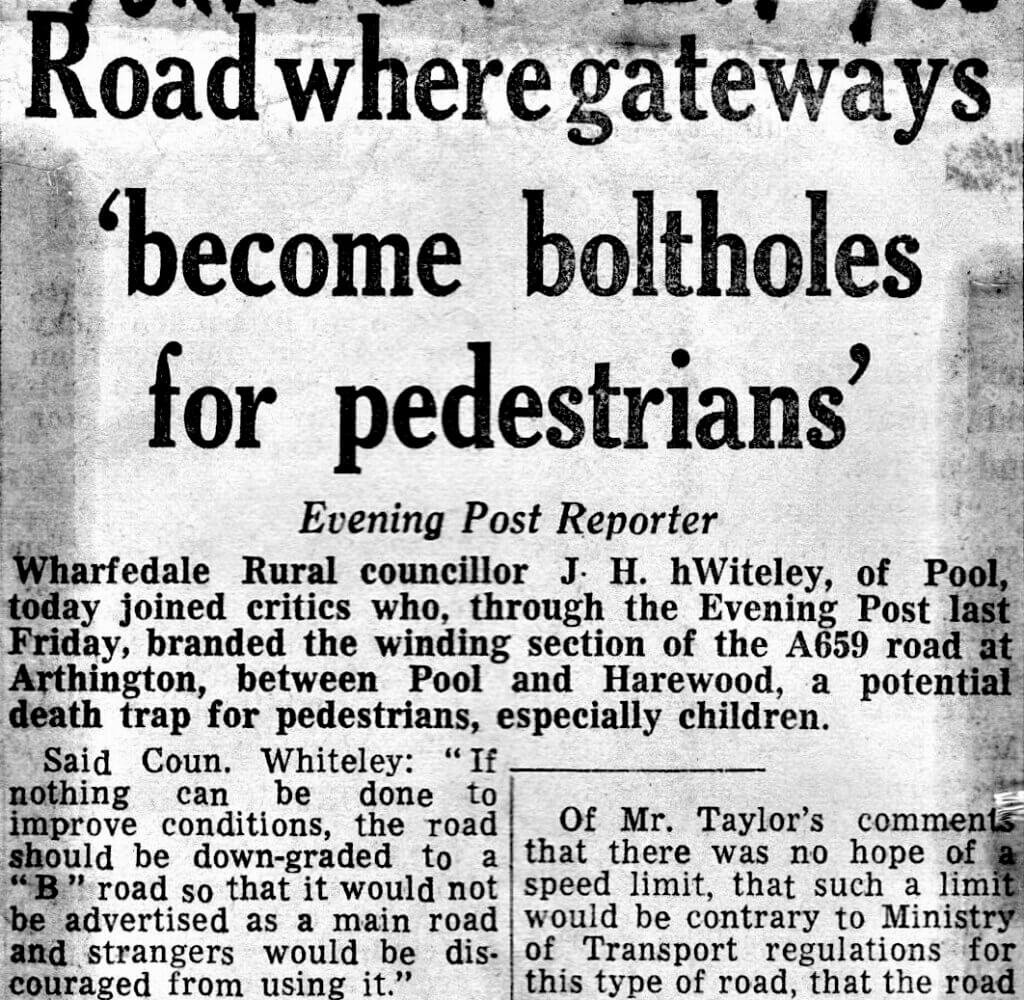
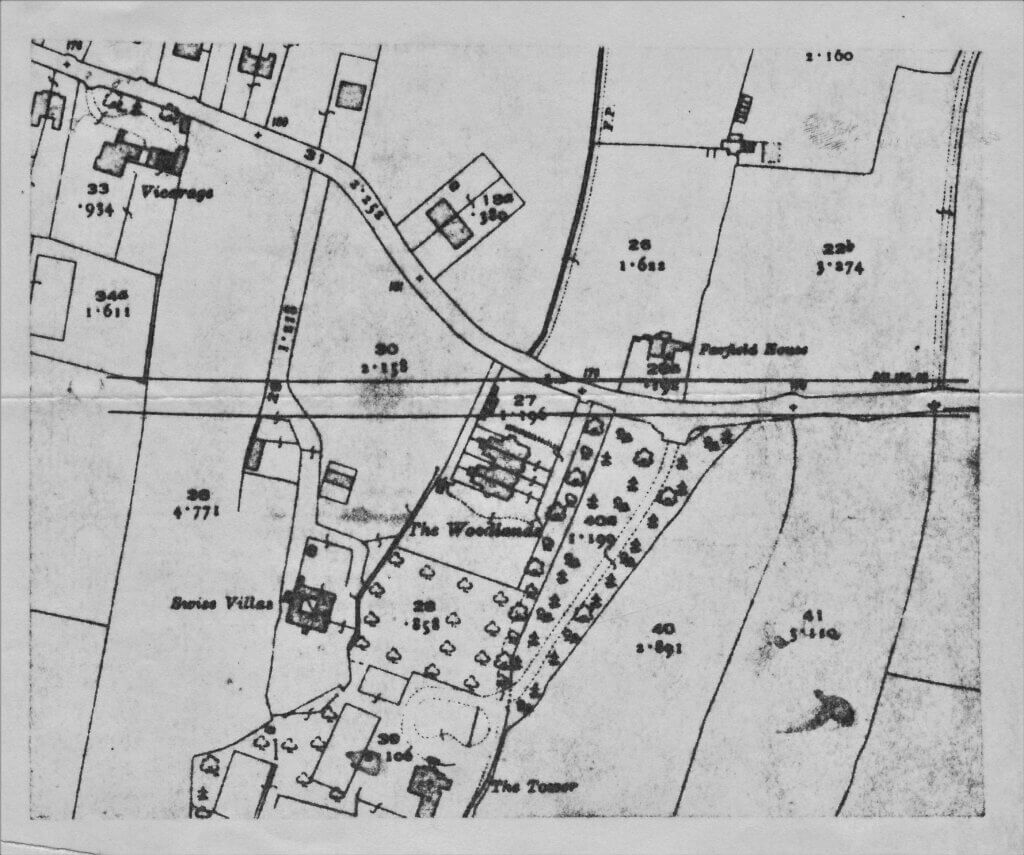
Over the years many attempts have been made to build a by-pass to no avail. A suggestion was made in 1961, shown above, which did not materialise. This was to pass to the south of Parklands (before the building of Redrow) to join up with Arthington Lane.
